


The Guardian of Scotland
If military history interests you, then Edinburgh Castle has plenty of stories, as it has been involved in many battles and invasions throughout history, especially with England.
Useful Information
Opening hours:
Apr-Sep 9.30am-6pm
Oct-Mar 9.30am-5pm
*Last entry one hour before closing
25 and 26 December: closed / 24 December and 1 January: reduced opening hours
Entry prices:
Online price
£23.50 adults
£19 (65yrs+ and unemployed)
£14 Child (7-15yrs)
Free for under 7s
Walk-up price
£26 adults
£21 (65yrs+ and unemployed)
£15.50 Child (7-15yrs)
Free for under 7s
You will also be able to experience what life was like for kings and prisoners in Edinburgh Castle, visiting the rooms dedicated to each one of them.
By virtue of its location, impressive defensive structures and the good state of conservation of most of its buildings, despite the Castle is among the most expensive Edinburgh attractions, it is definitely one of the most attractive.
Edinburgh Castle is one of the most visited attractions in Scotland, so it is strongly recommended to book your tickets online in advance. In busy periods, tickets can sell out well before the day of your visit.
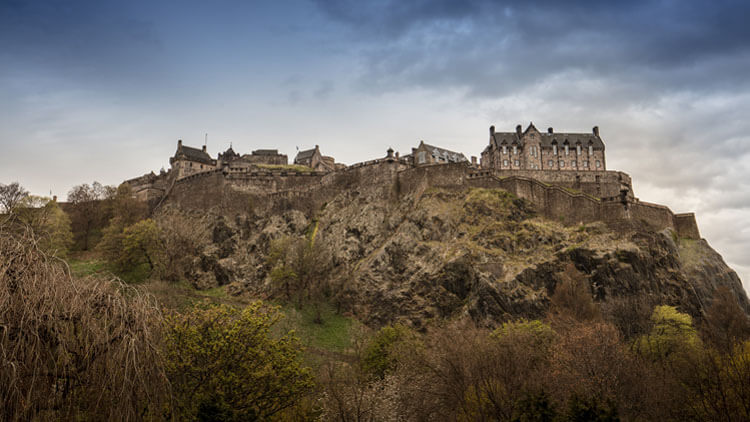
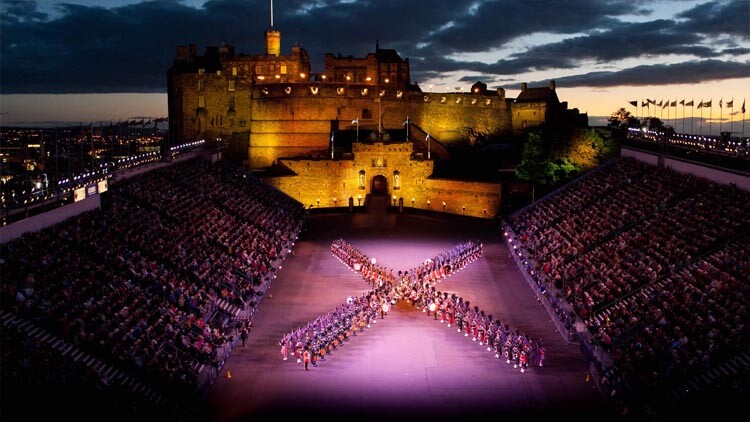
The Royal Military Tatoo: a unique show!
The gigantic rock on which stands the Castle of Edinburgh with a natural access only from the east. In this place sits today a large esplanade in which, during the month of August you can enjoy a unique spectacle: the Royal Military Tattoo.
In this incomparable scene, with the Castle in the background, you will see marching military bands from all over the world, wrapped in huge sets of lights and fireworks, creating an overwhelming atmosphere.
The Tattoo takes place on weekdays at 9.30pm and twice on Saturdays, at 6.15pm and 9.30pm, during three weeks in August. If you have managed to get a ticket, get ready for one of the most unforgettable experiences Edinburgh has to offer.
A military fort
As you enter Edinburgh Castle, look out for the statues of Scotland’s most famous heroes, William Wallace and Robert the Bruce, who fought in the Wars of Scottish Independence. Above the entrance, you will see the Scottish national motto, “nemo me impune lacessit”, which means “no one provokes me without impunity”.
Continue to the upper levels of the Castle, and you will see Mons Meg, a huge cannon from the 15th century, gifted to King James II. It was used in battle against the English, but was too big to easily manoeuvre. It has been a blank gun since firing its last shot in 1681.
You can also check out the various military museums around Edinburgh Castle, dedicated to important regiments who served there, and the Prisons of War, where captives were held.
A royal residence
Edinburgh Castle has more than just military history; it has also served as a home for the Scottish Royal Family, and you can visit various buildings that were once used by them.
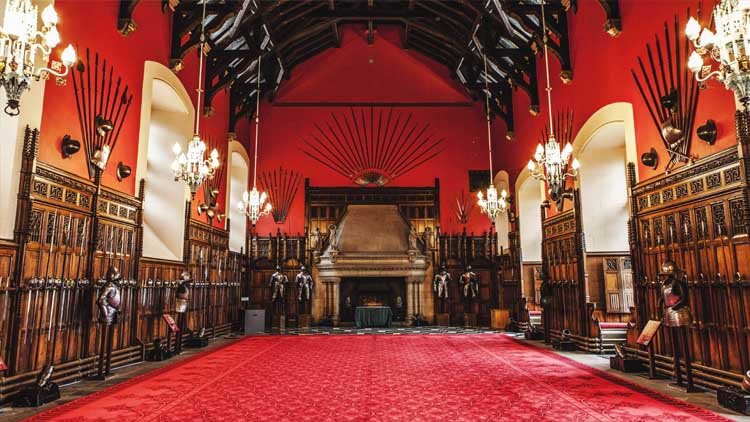
Don’t miss Crown Square, in the centre of the Castle, composed of the Royal Palace, the Great Hall, the Queen Anne building, and the Scottish National War Memorial. Here, you can see where grand banquets were held, or wander the rooms where royals once lived, including where Mary Queen of Scots gave birth to her son.
You can also visit the oldest building in Edinburgh, St Margaret’s Chapel, built in the 12th century by King David I, in honour of his mother. It fell into disuse for a time, and was even used as gunpowder store, before being restored in the 19th century.
The One O’Clock Gun
Immediately inside the Castle, on the right, is Mill’s Mount, the north facing battery, where you can see the One O’Clock Gun. If you’re anywhere near Edinburgh Castle at 1pm, you will hear it being fired, which happens every day except Sundays, Good Friday, and Christmas Day.
The Crown Jewels of Scotland
One of the most exciting areas in Edinburgh Castle is the Crown Room, where you can see The Honours of Scotland; the crown, the sceptre, and the sword. They were first used together at the coronation of Mary Queen of Scots in 1543, and since then, have had a turbulent history of being moved around and hidden for many years to protect them. They’ve been on display in the tower since 1818, since being rediscovered by Sir Walter Scott.
As well as the Jewels, you should also take a look at the Stone of Destiny, a huge slab of sandstone which was historically used in the coronation of Scottish monarchs for hundreds of years. It was stolen by the English in 1296 and kept in Westminster Abbey for around 700 years, before being given back to Scotland.
Location
You can only access Edinburgh Castle from one direction, by going up the Royal Mile and the Esplanade. You will have to pass by security at the first gates, then purchase your tickets before passing through the second gate.
Get directions to Edinburgh Castle.


